

Taking Measure Celebrates 10 Years of Science and Stories
For the past decade, Taking Measure has told the stories behind the groundbreaking research we do at NIST.
Our goal has been twofold:
- Present NIST’s science and research in a way that anyone can understand and appreciate, regardless of their background.
- Give our researchers a forum to tell their stories.
When Taking Measure launched on Jan. 14, 2016, then-NIST Director Willie May wrote in the inaugural post:
“Through this blog, we’d like to share with you our excitement and passion for the work we do. I hope we can answer some of your questions about science and technology, and about why we do this work. This blog will give you a glimpse into our labs and show you where science is today and where it might take us tomorrow.”
Over the past 10 years, we’ve done just that. We’ve heard from dozens of researchers and delved into topics ranging from the metric system to microbiology in more than 400 individual posts.
Below are 10 of our most memorable posts (in no particular order) from the past decade.
Credit: Courtesy of Justyna Zwolak
Ada Lovelace: The World’s First Computer Programmer Who Predicted Artificial Intelligence
After reading a book about Ada Lovelace to her young daughter, NIST scientist Justyna Zwolak explained that Lovelace’s story was a bit like Justyna’s own career trajectory. Lovelace had a love for mathematics and a belief that computers can be used to automate many of the laborious tasks humans do. The latter is the focus of Justyna’s research.
In her post, Justyna discussed how Lovelace predicted AI as we know it today. She argued that though computers had endless potential, they needed human input to create anything original.
Credit: Burrus/NIST
How 9/11 Changed Me and First Responder Communications
Dereck Orr vividly remembers his experience on Sept. 11, 2001, when he was a Congressional staffer. What he didn’t know at the time was that the attacks would lead him on a new career trajectory.
In the immediate aftermath of the attacks, first responders from various departments were unable to talk to each other on their radios. This was a factor in the inability to save the 343 firefighters who died in the World Trade Center buildings. Dereck, who now leads our Public Safety Communications Division, has worked with his colleagues to advance public safety communications and promote the safety of first responders.
Credit: Courtesy of Katarina Cicak
From Escaping a War to Becoming a Mom of 3 at Once, Science Has Always Been There for Me
NIST physicist Katarina Cicak fled her home country of Bosnia during the 1992 civil war. She was only a teenager and landed in California with one suitcase. Katarina threw herself into her education and built a successful career in quantum science.
“I learned as a young adult not to get too attached to material things; they can be gone in an instant,” Katarina wrote in her post. “But there were some things I knew no one could ever take from me — an education and my love of science.”
Credit: R. Wilson/NIST
5 Concepts Can Help You Understand Quantum Mechanics and Technology — Without Math!
Classical physics governs the world we see with our eyes, but quantum physics can be harder to grasp because we can’t see it easily. But just because it’s abstract doesn’t mean we can’t understand it, said NIST physicist Tara Fortier in a post on quantum mechanics.
Tara is passionate about making quantum accessible to all. In this post, she breaks down various concepts in quantum — no math required.
Credit: M. King/NIST
From the Steel City to the Lab: Strengthening the U.S. Steel Industry Through Science
NIST materials research engineer Andrew Iams calls the Steel City (aka Pittsburgh) home, so it’s not surprising that he chose to pursue a research career centered on steel. The goal of Andrew’s research is to support a vibrant and resilient domestic steel industry.
“This work is deeply personal, rooted in the industrial legacy of the community where I grew up. I hope that this work will lead to future opportunities not just in Pittsburgh but in manufacturing towns across the country,” Andrew wrote.
Credit: welcomia/shutterstock.com
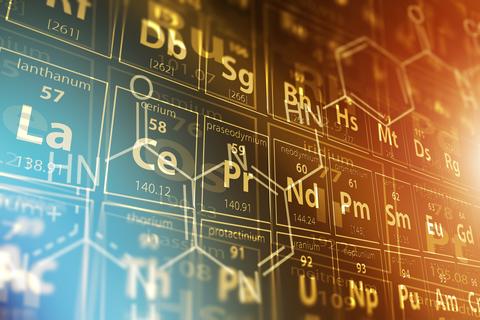
The Periodic Table: It's More Than Just Chemistry and Physics
You may remember learning about the periodic table in a science class, but NIST managing editor Ben P. Stein showed us in a 2019 post that the periodic table is much more than just science. The periodic table is rich in history, literature and language. The element strontium, for example, is named after a Scottish village where the mineral containing the element was found. Elements are often named for people or places and have interesting backstories.
“One small chart is both a source of knowledge and a springboard for creativity, in so many fields. It’s so much more than a poster in your high-school chemistry class; it’s a roadmap for the future,” Ben wrote.
Read the full post (one of our most popular for page views) for more of this trivia and dazzle your friends and family with your elemental knowledge!
Credit: J. Stoughton/NIST
It’s All Right to Be Wrong in Science
Humility is a crucial personality trait for a scientist, I learned from reading NIST physicist Paulina Kuo’s 2018 post on being wrong in science. As you probably learned in school, the scientific method involves formulating a hypothesis and then determining if it’s correct. Sometimes those hypotheses aren’t correct, but being wrong sometimes is part of the journey to finding the truth.
“Making errors in science is just part of the process and allows scientists to learn and broaden what we know. It’s only by being wrong that we ever learn what’s right,” Paulina wrote. “So, to all you scientists and non-scientists, go forth and be wrong! You’ll probably discover something new on your journey.”
Credit: F. Webber/NIST
Busting Myths About the Metric System
The idea that the U.S. doesn’t use the metric system is simply a myth, explained NIST researcher and Metric Program Leader Elizabeth Benham in her 2020 blog post. All countries have adopted the SI (also known as the metric system), including the United States, even if it’s not used in all measurements. In fact, the metric system has been the preferred system for weights and measures in U.S. trade and business since 1988!
Credit: R. Wilson/NIST
How Henrietta Lacks Changed My View of Human Cells as a Physicist
NIST physicist Greta Babakhanova studies the viability of human cells — essentially, how alive and functional they are. The goal of this research is to further biotechnology applications, such as the use of human cells in medical therapies. Greta’s perspective on her research was partially shaped by the book The Immortal Life of Henrietta Lacks. The book tells the story of a Black woman who died of cancer and whose cells were used in research without consent. Today, scientists obtain consent from the donors of the cells they work with, and Greta is grateful to those who’ve donated to make her work possible.
“Lacks’ story forever changed my perception of my experimental samples containing living spherical objects and made me realize their connection to real people, not just where the cells come from, but also whom my work affects,” Greta wrote.
Happy Birthday, Taking Measure!
As you can see from these summaries, our researchers are passionate about their important work. We’re grateful to you, our readers, for joining us on this journey over the past 10 years. We look forward to sharing many more stories in the years to come.
Legal Disclaimer:
EIN Presswire provides this news content "as is" without warranty of any kind. We do not accept any responsibility or liability for the accuracy, content, images, videos, licenses, completeness, legality, or reliability of the information contained in this article. If you have any complaints or copyright issues related to this article, kindly contact the author above.
